Well Put Together

Posted on Dec 12, 2008

What to Include in Your Fashion Portfolio
How to Become a Fashion Designer ( Part 6 )
W

hat’s the most common faux pas when it comes to fashion design portfolios? Many fashion design students and entry-level apparel designers make the mistake of filling their fashion portfolios with all of their favorite fashion illustrations, or photos of garments they’ve made. The trouble with this is that apparel industry companies don’t need to see tons of imaginative avant-garde fashion sketches – who’s really going to wear that stuff? They just don’t sell! Don’t get me wrong, you should still show off some fashion figure illustrations and your ability to develop an apparel design collection, but following an organized presentation format is a much better approach to showing off your fashion design talents and skills.

Choose Your Dream Market

First thing’s first: decide in which market you want to have your fashion career, and make a list of fashion industry companies that fit into that category. For example, if you would love to be a fashion designer for a better sportswear collection such as Bebe, other fashion companies on your list could include Armani Exchange, Anthropology, and DKNY. Then take some time to look into the companies you chose. What’s their design philosophy? Who is their customer? Where do they draw inspiration from, and what does their current collection look like?
Once you’re familiar with the type of fashion industry companies you want to design for, think about what they want to see from you – the fashion designer. You’ll need to show that you have an eye for style and can create a cohesive apparel design collection for a specific customer, and the company should be able to identify with the price point and styling of your fashion designs.

Putting It All Together

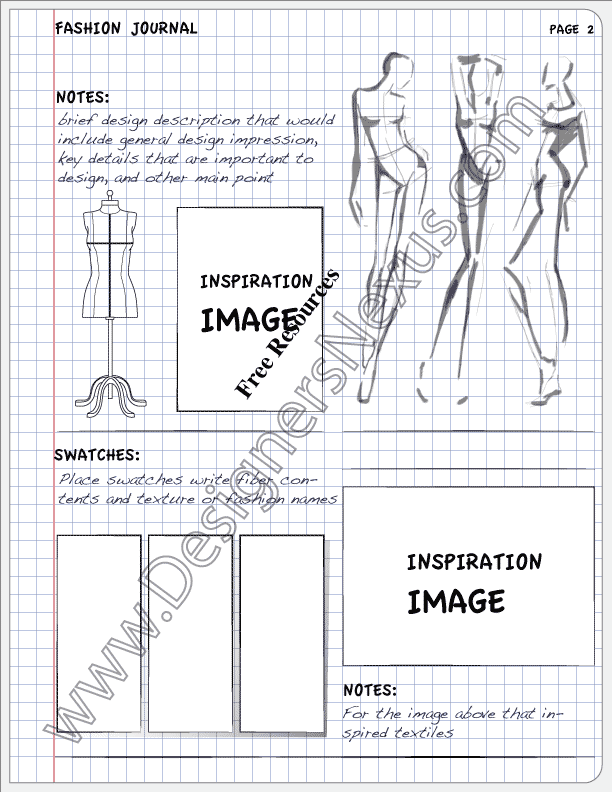
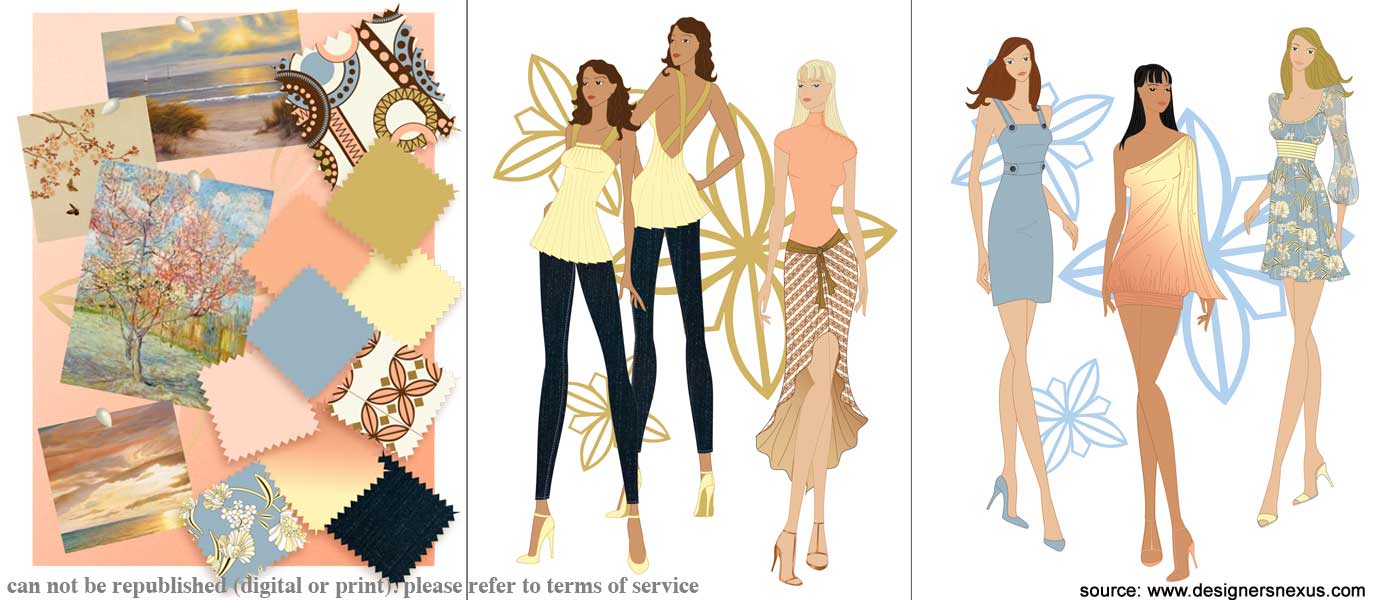
In addition, most entry level or assistant fashion designers start out sketching computer fashion flats, assembling fashion presentation boards, and preparing apparel tech packs. Show your prospective employers that you’ve got each area covered! Develop a series of 3 to 6 small groups with 6 – 8 fashion figures or complete outfits per group. Start off each design group with an inspiration page: a collage of images, fabric swatches and other findings that help set the mood and introduce the color story for the group. Next come the fashion illustrations, which show fashion figures in various poses wearing your apparel designs. These fashion sketches will demonstrate how garments will look on a fashion body and give you the opportunity to express how you would match up each piece to create coordinated outfits.
Following your fashion figure illustrations are flat sketches or floats (stylized flats). A “flat” is basically a black and white sketch of how a garment looks when laid flat. Fashion flats must be clean, correctly proportioned, and include all garment details like: seams, topstitching, buttons and hardware. While some apparel companies still sketch flats by hand, the vast majority creates flat sketches via computer so it is important that you are comfortable using popular CAD software such as Adobe Illustrator for the fashion industry.
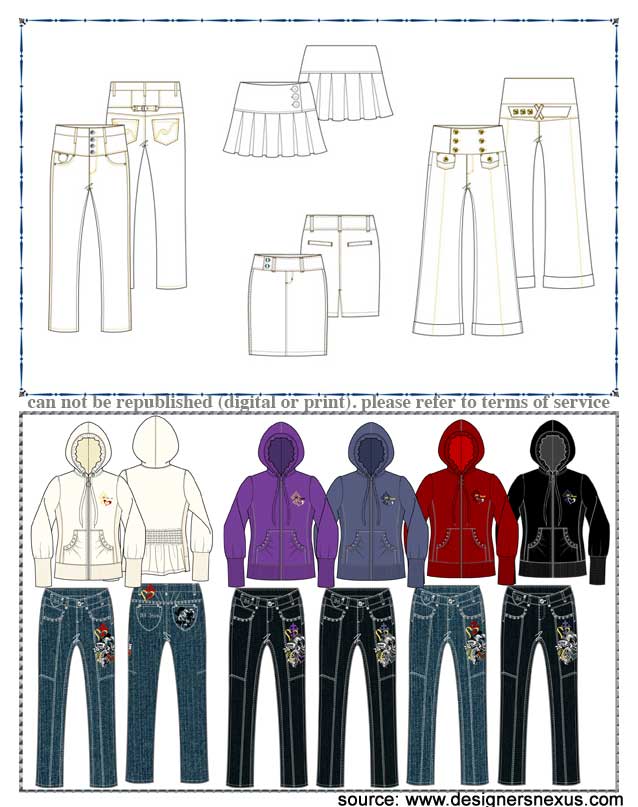
Apparel floats are more stylized versions of flat sketches that usually show some kind of movement in the garment. Alternating the use of flats and floats from one fashion design group to another is a good way to add variety to your fashion presentation layout while showing your versatility. Fashion CADs (flat sketches rendered with colors and fabrics) can also be incorporated into a group of your fashion illustrations or flats and can be added as a separate section.

And please don’t just display your fashion sketches on a plain white or solid color page! Tie each design group together using fashion backgrounds that follow the theme for each group. Fashion backgrounds are an extra opportunity to show your creativity and fashion presentation skills.

Does Size Really Matter?

In a word: yes! Make sure your fashion design portfolio is a manageable size. Most likely, you’ll be showing your fashion portfolio in an office and need to open it on a small or cluttered desk. Anything larger than 9″ x 12″ is just too large and unnecessary. I remember making my first fashion portfolio 11″ x 17″ (the advice of a college professor, believe it or not). As you can imagine, it was not practical at all – I even recall one interview in a small office where I had to present my apparel design portfolio from my lap!

That being said, by following these guidelines, you’ll be sure to create a kick butt fashion design portfolio that will get your talents noticed and give your fashion career a competitive edge amongst other apparel design candidates!

  |  

14 Responses to “Well Put Together”

  1. Kristin

    Sep 07, 2011

    @may – You can choose to include apparel spec sheets in your fashion design portfolio, especially if the position responsibilities include fittings or sample requests (many apparel design jobs do).

    One option is to include some spec sheets at the end of a design group for several garments in that collection. For example if you have a design group with 6 figures (6 complete outfits), you can include spec sheets for each garment at the end of that grouping (after the flat sketches or CAD sketches if you have them). Try to include apparel spec sheets for a variety of garment styles- i.e.: tops, bottoms, dresses, skirts, jackets.

    Another option is to have a separate section at the back of your portfolio with spec sheets for various garment designs from your portfolio.

    To learn more about measuring garments and creating spec sheets, see our How to Spec a Garment article.

    Hope this helps and Best of Luck in your search!!!

  2. may

    Sep 07, 2011

    Should you add specification sheet examples as part of your fashion design portfolio? In your opinion, how is the best way to handle this in the formatting of your book?

  3. Sofia

    Oct 30, 2010

    nice))

  4. Kristin

    Oct 23, 2010

    @preity – When developing a design portfolio for fashion school, most professors will want to see that you know your fabrics, so it’s definitely a good idea to get real fabric swatches to go with your designs. Many fabric stores will cut you a small fabric swatch for free (let them know you are a student), while some stores will require you to purchase a small minimum yardage (usually 1/8 or 1/4 yard).

    It’s okay to use printed paper swatches if you’ve designed your own print repeat, if you want to show multiple colorways of a fabric swatch, or if you’re demonstrating your CAD / textile design skills.

  5. preity

    Oct 22, 2010

    Swatches should be real or can be taken as a print on paper while making fashion portfolios for design schools?

  6. Kristin

    Oct 19, 2010

    @Pooja – We’re not quite sure what direction you’re planning to take your career, so it’s hard to be more specific. Assuming you want to stay in the fashion design / product development end, you need to think about more than just pretty clothes when developing a line for your portfolio. As a fashion merchandiser, you’ll need to show prospective employers that you can spot emerging fashion trends and identify key items that will appeal to your target market.

    You’ll also need to demonstrate that you can analyze items from past seasons: distinguish why some designs worked and others didn’t. If a design didn’t sell; was it wrong for your target market? Or was it the wrong fabric, color, price, or time? And is there anything that can be done to fix it, or is it a total waist? It’s also important to show that you can take a basic item and update it so it appears fresh to the consumer. The same goes for best selling items – you’ll need to make sure they don’t go “stale” so they continue to sell well.

    To demonstrate the above skills in your fashion portfolio, you should include pictures from magazines and stores. Create collages that show what you think will be a big fashion trend (for your target market). Also show images of an item you think will be the next big thing, along with a small report on why you think the item will be a hit. If you like, you can also incorporate your own design sketches to show how you would develop these trends into a fashion line that sells.

    Another idea is to visit fashion stores at the end of the season and take a look at the clearance racks. Take pictures and include a small report on why you think these items didn’t sell based on the 5 P’s of fashion merchandising (product, price, place, promotion, & people).

    Hope this helps, good luck in your search!

  7. Pooja Biswas

    Oct 13, 2010

    I have 3 years experience as asst merchandiser and designer. Can you give me some tips how to prepare portfolio according to my experience?

  8. Kristin

    Jul 31, 2010

    @Nicole – We agree that fashion illustrations aren’t very practical nowadays, but it’s probably best to include at least a few in your portfolio anyway. There are still some companies that use figure drawings, and most companies like to see figure sketches that show the creativity of the designer.

    Good Luck in your search!

  9. Nicole

    Jul 30, 2010

    I have over 3yrs experience as a ladies outerwear designer and have been working in Hong Kong. All the customers we encounter only produce technical pack drawings, never figure drawings. However, I am applying for a design job in the UK but my portfolio consist only of flat technical CAD drawings, no figure drawings.

    Do you think its necessary to include figure drawings or could I just include photos of garments being worn by professional models? I feel only apparel and graduates mainly have a portfolio of figure drawings.

  10. Kristin

    May 03, 2010

    @Teray – If you’re interested in a Technical Designer position, you’ll need to show employers that you know your stuff! Your portfolio needs to be different from the typical “Fashion Design” portfolio, which is heavily focused on fashion illustrations. In addition to accurate technical flat sketches, an impressive technical design portfolio will include plenty of tech packs- complete with spec sheets, detail sheets, grade sheets etc. You need to demonstrate that you know garment construction well, and are able to make comments on how factories can fix a bad fitted garment to achieve the correct fit.

    As a Technical Designer, you are responsible for tech packages (sample requests & 1st fit samples), and conducting fit approvals. The typical procedure is:
    - When a P.O. (Purchase Order) is placed, the garment goes to Tech Designer who requests a fit sample.
    - Fit comments are given and samples are resent until the sample is approved.
    - When the sample is approved, a size grade is sent with approved specs for each size range for that style.
    - Before the garment goes into production, pre-production samples (usually a sample for each size) are submitted to the tech designer for approval.
    - Once the garment enters production, 1st production samples are submitted, followed by shipment samples, which are packaged as they would be for shipping to retail stores.

    There is a certain way to measure garments and do fit comments which is slightly different from patternmaking. Our “How to Spec a Garment” ebook covers these skills in detail. You’ll learn how to spec (measure) garments and it includes Excel tech pack templates for different types of garments. You can take some free flat sketch downloads from our site and create your own spec packages for them. You can also find a bad fitting garment in a store (there are plenty out there!), and fill in your own fit correction comments. Knowing how to use Microsoft Excel to format your own tech packs is also helpful – you might be interested in the “Special Package” with both our Excel and How to Spec ebooks. Knowledge of Web PDM will also make sure you have all the bases covered.

    We don’t think you’ll need to get another internship, but if this will be your first real job, you might want to look for assistant tech designer positions, which your experience level should be perfect for! Technical designers are usually very high in demand, so you should have no problem finding lots of positions to choose from!

  11. Teray

    Apr 30, 2010

    I have an AA Degree, a 3 month internship at a local design house and 6 months patternmaking internship. I applied for an technical design position. My interviewer said she wanted me to have more experience. Was I supposed to come back with some sort of counter or do I really need to get more experience. Oh, should I ask her if they have an internship or training program?

  12. Kristin

    Apr 30, 2010

    @Gaby – This is a tough one, since portfolio requirements vary from school to school, and change from year to year. I suggest finding out what the requirements are for the school(s) of your choice and try to meet them as closely as possible.

    Feel free to use our Croquis and Fashion Templates to help out with your portfolio sketches!

  13. Teray

    Apr 30, 2010

    Gaby, I always find examples on StylePortfolios.com and FashionFrog.com of course.

  14. Gaby

    Apr 28, 2010

    Hi, I’m applying for a scholarship in fashion design career, and the school is asking me for a portfolio of artwork or flat sketches. I’m new on this, and I’m working on my designs, but i’m still a little lost. I really would like to cause a great impression with my portfolio so they grant me the scholarship. Do you guys have any suggestions about like basic things I should add to my portfolio? Thanks beforehand.

Leave a Comment