
Important Skills that Fashion Schools Don’t Cover Nearly Enough
How to Become a Fashion Designer ( Part 3 )
In fashion school, most of your time was spent learning how to hand draw fashion illustrations, draping, sewing, and apparel patternmaking. While these are certainly good skills for fashion designers to have, they aren’t very practical when you’re trying to land your first apparel design job in the fashion industry. In the real world you’ll be expected to know how to draw fashion flat sketches, measure garment specs, and create CADs and presentation boards. I know some of you are thinking “But I learned those things in fashion school too!” To which I reply: You think you know, but you have no idea!
Take it from experience: fashion schools don’t focus on the above skills nearly enough to fully prepare you for your first job in apparel design. Here's the low-down on what skills to focus on for getting your foot through the door on your first apparel design job.
Apparel Draping and Patternmaking
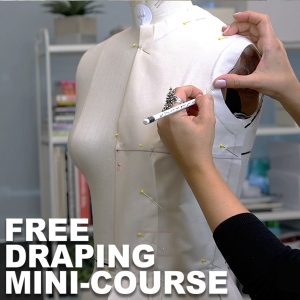
Patternmaking and draping are valuable skills, which come in handy when you are dealing with a lot of apparel fittings. Usually garment fittings are conducted by technical designers, but if you are interested in a fashion design career for creative reasons, you’ll most likely be miserable in this type of position. On the creative side of fashion design, all you need is a basic understanding of what creates a good fit, and how to fix a bad one. In the vast majority of apparel designer positions for fashion companies, hands-on patternmaking skills are not necessary, unless you plan to enter Project Runway!
Sewing
On the creative side of fashion design, sewing is as relevant as patternmaking is for technical design. It’s important to understand the general concepts of garment construction, but you don’t need to be an expert seamstress. In the apparel industry, if you need to know how a certain neckline or seam finishing is constructed, there are tons of references available: from apparel in clothing stores, to “how to” fashion design books and online articles. The point I’m trying to make is: if you’re sewing skills leave something to be desired, don’t stress over it.
Illustration
Sadly, fashion illustration is a dying art in the fashion industry- fashion illustrations are very scarcely used by apparel designers in the real world. They take too much time and have no practical application. The showy fashion illustration has been replaced with computer drawn stylized garment sketches (floats) or more accurate technical design flats (flat sketches), which are more popular for their practicality. Not only do they present a clear representation of the apparel design concept, but they are also a must-have for garment production. Fashion flats can easily be turned into CADs and used in mood/presentation boards. Amazingly, fashion schools have not followed this industry shift, and still focus more heavily on fashion illustrations, and not enough on flat sketching.
CAD (Computer Aided Design) Programs
I can’t stress enough the importance of knowing popular computer applications for creating fashion flats, floats, and CAD sketches. Most apparel design companies expect proficiency in Adobe Illustrator, Adobe Photoshop, and Microsoft Excel. These standard programs are relatively affordable in comparison to other fashion industry specific software and data management systems, which run from $7K to $30K per user- yikes! Unfortunately, the coverage of Illustrator and Photoshop provided by fashion schools does not meet the actual demands of the apparel industry. Many fashion companies also request knowledge of WebPDM, so if your fashion college offers a course in this program, it would be wise to take it. If your fashion school does not teach this program, make it a point to find a school or venue that does offer this program and take it!
In the Interview
It’s amazing how many fashion design candidates are rejected because they don’t know the most important basics. Hiring companies look at applicants’ fashion design portfolios: filled with beautiful, well-drawn fashion illustrations and then say “That’s nice, but can you draw flat sketches?” If fashion flat sketches are included in their portfolios, they are usually very basic, lack important details, and are not visually appealing. If the candidate’s apparel sketches are halfway decent; my next question is “do you know Illustrator and Photoshop? “ Almost everyone says yes, but when tested, it’s usually far from the truth. It’s not that they are lying…a lot of fashion design graduates and even professional designers seriously believe they know these CAD programs well. They did well according to fashion school standards; but fashion schools don’t teach how to use Adobe Illustrator and Photoshop for fashion design well enough for entry level fashion designers to be competent in the demanding apparel industry. Fashion schools just cover basics, which are quickly forgotten without practice. Take the extra effort to explore these and other fashion CAD programs beyond what fashion schools teach: read books, find online fashion tutorials and courses. Not only will you be ready with the skills you need to succeed in the fashion industry, but discussing how you went the extra mile to keep up with apparel industry standards will definitely impress any prospective employer!
Practice, Practice, Practice
We highly recommend practicing flat sketching as often as you can. Make sure you learn, and are really comfortable with Adobe Illustrator and Photoshop for Fashion Design - what you’ve learned in fashion school is not enough!! To acquire additional knowledge: read books, take additional courses, (offered in either classroom or online settings). Take a look at industry standard examples of flat sketches. Our free Fashion Flat Sketches section contains many free downloads of flat sketches in vector (.ai) and bitmap (PNG) formats for your reference. If you can improve your skills to reach the quality of those shown, you’ll be in very good shape. They are free for you to use. Please download them so you can also use them as slopers to trace and work from.
Educate Yourself!
Many fashion schools such as FIT in New York (Fashion Institute of Technology) offer “Flats and Specs for the Fashion Industry” courses. But believe it or not, they are not required by the curriculum; they are electives! These are some of the most important skills that fashion design students should be learning. Another good elective course is “Creative Fashion Presentation”- this skill is very handy. Sales people use CAD fashion presentations a lot as visual aids. In addition they create a good impression and convey your creativity level. If you can make outstanding fashion presentations you’ll be asked to make them often, and believe me it’s more fun to make presentation boards as an assistant designer, than do fittings, send faxes, and organize showrooms.
Creating Specs in a Copycat Industry
So now we can talk about specs (garment specifications). Knowing how to spec a garment (measure and detail garments) is a fundamental skill for a fashion designer. Many apparel companies create their fashion spec sheets using Microsoft Excel. Although garment sizes and measurements vary from one fashion company to another, if you know the principles, you’ll be able to quickly adapt to the standards of any company. You don’t even need to know how to develop apparel specs from scratch!
As a head fashion designer, I’ve had to make decisions on what garment spec standards to use. Often I simply went to different fashion stores, and found garments with a good fit and copied the basic measurements. And this isn’t a rare practice - the fashion industry is a major copycat industry- most apparel that we see hanging in the stores are knock-offs of another fashion brand, who copied the design from another design brand, and so on. There are even official terms for copied fashions! A “knockoff” is when a style is copied, and a “rub-off” is when patterns are copied. Once, while on a European shopping trip in London, a sales person at a store noticed I was a fashion designer collecting design ideas for an upcoming season. He mentioned that his store received a constant flow of fashion designers from famous American design companies, whose designers come to knockoff their merchandise. That’s right- even top fashion design brands use knockoffs for their ready-to-wear collections.
To some up: in order to get a job in the fashion industry before the rest of the entry level fashion design candidates, you need to focus on refining skills that are highly demanded in the apparel industry. Become proficient in drawing flat sketches and include apparel flats in your fashion portfolio, and be extremely comfortable and knowledgeable in Illustrator and Photoshop. Check out the My Practical Skills Store, where you’ll find our ebook tutorials for Adobe Illustrator, Adobe Photoshop, Microsoft Excel, and How to Spec a Garment for the Fashion Industry. Each ebook contains easy to follow tutorials, with illustrations every step of the way. They are designed to prepare you with comprehensive industry specific skills and foundations to give your fashion design career a competitive edge!